

If you keep asking yourself, “Why is my vinyl siding warping?” you are far from alone. Vinyl siding warping shows up as waves, bulges, or panels that pull away from the wall, and it almost always has an identifiable cause. Sometimes the fix is as simple as moving a grill. Other times it points to an installation problem, a reflected heat issue, or hidden moisture that needs a professional eye.
This guide walks through what warping looks like, how vinyl is supposed to move, the most common causes, how to diagnose your own home, and what repairs make sense. If you would rather have an expert take a look, contact us online to schedule a siding consultation in the Charlotte area.
Quick Answer: What Causes Vinyl Siding Warping?
Vinyl is a plastic that expands in heat and shrinks in cold. When something stops it from moving freely, or when it gets hotter than it was designed to handle, the panel distorts. In most homes, the culprit is one of these:
- Fasteners driven too tight, which pin the panel in place
- Panels cut or overlapped incorrectly, leaving no room to slide
- Nearby heat sources such as grills, fire pits, and dryer vents
- Sunlight reflected from low-E windows onto one spot
- Repainting in a darker color that absorbs more heat
- Moisture and damage behind the siding that pushes panels outward
The rest of this article explains each cause in detail so you can match what you see on your walls to the most likely explanation.
What Vinyl Siding Warping Looks Like
Warping does not always look dramatic at first. Walk the exterior of your home slowly, and look at the walls from an angle as well as straight on. Low sunlight early or late in the day makes ripples much easier to spot.
Waves and Ripples (Oil Canning)
Waves running along a panel are often called “oil canning” or stress buckling. The surface looks wavy rather than flat, even though the panel is still attached. This usually means the vinyl is under pressure and has nowhere to go.
Bulges and Humps
A bulge pushes out from the wall in one area. It may come from a panel that is trapped on both ends, from swelling or damage behind the siding, or from a wall surface that is not flat.
Melted or Distorted Patches
Shiny, drooping, or puckered patches in one concentrated spot often point to a heat source. Look at what sits near that spot, such as a grill, a vent, or a window that faces it.
Gaps, Sagging, and Pulled-Away Panels
Panels that sag, pull away from corners, or leave gaps at seams have usually moved more than the installation allowed for. Gaps can appear when panels shrink in the cold, especially when they were cut too short or not trimmed properly.
Whatever you see, take clear photos and note where the damage sits. The pattern is your best clue, and we will use it in the diagnosis section below.
How Vinyl Siding Is Supposed to Move
To understand warping, it helps to understand normal movement. Vinyl siding is designed to shift slightly all day long, every day, for decades. Problems begin when that movement is blocked.
Why Vinyl Expands and Contracts
According to JLC’s vinyl siding field guide, vinyl has a high coefficient of thermal expansion, and a 12-foot length can expand about 5/8 inch from winter to summer. Westlake Royal Building Products, a siding manufacturer, makes the same point in its guidance on accommodating expansion and contraction: nearly every building material moves, and the installation instructions are what make that movement harmless.
Think about what 5/8 inch looks like across a long wall. If the panels cannot slide, that movement has to go somewhere, and the only place left is outward as a ripple or bulge.
How Installers Build In Room to Move
Proper installation includes several details that all serve the same purpose:
- Centered fasteners. The industry’s installation tips call for nails or screws in the center of each slot so the panel can slide in both directions.
- Loose nail heads. Fine Homebuilding describes leaving the head about 1/16 inch off the nailing flange, with nails spaced roughly 12 inches apart.
- Overlaps that slide. Adjacent panels are overlapped so they can move sideways past each other without buckling or opening gaps.
- Room at the ends. Panels should not be jammed tight into corner posts, J-channel, or window trim.
Why One Mistake Can Affect Many Panels
Siding is a connected system. One restricted panel pushes against its neighbors, and the stress travels. Feldco describes this as a “domino effect” in its own article on warped vinyl siding, where one compromised panel can lead to others. That is a big reason to diagnose problems early instead of waiting.
The Most Common Causes of Vinyl Siding Warping
Here are ten causes we see most often, starting with the most common.
Panels Nailed Too Tightly
This is the number one cause. Panels are meant to hang loosely from their nails. When fasteners are driven flush against the nailing flange, the panel is locked in place. On a hot day the vinyl tries to expand, cannot slide, and buckles.
An installer working quickly, or a homeowner working with a power nailer, can easily overdrive nails. Manufacturer installation guides commonly specify a small gap of roughly 1/16 to 1/8 inch between the nail head and the flange, and they ask installers to drive nails straight rather than at an angle.
Face Nailing and the Wrong Fasteners
Nails driven through the face of a panel, instead of through the slots, hold the vinyl rigidly. The installation standard for vinyl siding, ASTM D4756, warns against face nailing because it restricts thermal movement. Fasteners that are the wrong type or placed outside the slot cause the same trouble.
Screws are allowed in some cases, but the industry’s guidance says they must not restrict the normal expansion and contraction of the panel. Fasteners also need to be corrosion resistant and long enough to reach solid material: the installation tips mention a minimum of 1 1/4 inches into nailable material such as sheathing or framing.
Panels Cut Too Long or Overlapped Too Much
Panels that are jammed against corner posts or trim cannot lengthen when it gets hot. An InterNACHI inspection guide lists inadequate gaps where nailing hems meet, with a 1/4 inch gap given as an example, among the common vinyl cladding defects.
Too much overlap between panels has a similar effect.
Uneven Walls, Missing Sheathing, and Floor Plate Compression
Siding needs a flat, solid surface. The industry’s installation manual says vinyl should be applied over sheathing that provides a smooth, flat surface, and that it should never go directly onto studs without sheathing. A wavy wall produces a wavy siding job no matter how carefully the panels are nailed.
The same guidance warns that floor plate compression can buckle siding where the floor meets the wall. As a house settles, that joint can push on the siding above it.
Heat From Grills, Fire Pits, and Dryer Vents
Home inspectors regularly see melted siding near patios. Structure Tech, a home inspection company, notes that melted vinyl about chest height near a patio or deck is usually the result of a grill placed too close to the house. The same risk applies to fire pits, patio heaters, and exhaust vents that blow hot air onto the wall.
These cases tend to show up as a concentrated patch rather than a ripple across a whole wall.
Reflected Sunlight From Low-E Windows
This is the cause that surprises homeowners most. Low-E coatings help keep a home comfortable, but windows can also reflect concentrated light onto nearby siding. A report summarized by Fine Homebuilding notes that the Vinyl Siding Institute says temperatures from 160 to 165 degrees Fahrenheit can soften standard vinyl siding, while heat reflected from double-pane low-E windows has been measured above 200 degrees.
Moisture and Hidden Water Damage
Not every bulge is about heat. Water that gets behind the panels can soften sheathing, and a swollen or damaged wall can push the siding outward. Poor flashing, clogged gutters, sprinklers that spray the walls, and pooled water near the foundation are common sources.
Siding is meant to drain. When a bulge comes with stains, a musty smell, or soft spots, treat it as a moisture problem first.
Pests and Long-Ignored Damage
Termites and other insects can damage the structure beneath the siding, which then shows up as bulging or unevenness. Feldco treats pests as an uncommon cause to check after the more likely ones are ruled out, and that is a sensible order. Long-ignored problems also spread, because a single distorted panel strains the ones around it.
Other Trades Undoing the Expansion Allowances
A careful siding job can be compromised after the fact. Light fixtures, hose bibs, vents, and cable mounts that clamp the vinyl tightly to the wall can all hold a panel where it should be free to move.
Does Weather Cause Vinyl Siding Warping?
Many homeowners blame the sun or a hot summer. The truth is more specific. O’Donnell Brothers argues that warping comes mainly from installation rather than climate, and that general sunlight is usually not the culprit, apart from reflected sun from a nearby window.
That matches what we see. Heat is the trigger, but a properly installed panel has room to handle it. When siding warps on a hot day, the heat revealed a problem that was already built into the installation, the wall, or the surroundings.
How to Diagnose Vinyl Siding Warping at Your Home
You do not need special tools to narrow down the cause. A camera, a ladder you trust, and a few minutes on each wall go a long way.
Match the Pattern to the Likely Cause
| What you see | Likely cause | First step |
| Ripples across a whole wall or several walls | Fasteners too tight or panels restricted | Have an installer check nailing and trim gaps |
| Melted patch near a patio or deck | Grill, fire pit, or heater too close | Move the heat source away from the wall |
| Small, odd shaped distorted area facing a window | Reflected sunlight from low-E glass | Watch the wall at different times of day and block the beam |
| Warping after a repaint | Color darker than the original | Ask a pro about vinyl safe colors and replacement |
| Bulge with stains, odor, or soft spots | Moisture behind the siding | Stop the water source and inspect the wall |
| Ripples at the base of a wall near a floor line | Floor plate compression or uneven framing | Have the wall evaluated before replacing panels |
A Simple Walk-Around Checklist
- Walk each wall in the morning and again in late afternoon, and photograph any distortion.
- Note what sits near each problem area: grills, vents, fixtures, windows, and downspouts.
- Check whether the damage lines up with a window, either on your house or a neighbor’s.
- Press gently on bulges and look for soft spots, stains, or a musty smell.
- Try sliding a few panels sideways by hand. Panels that will not move at all are likely pinned by fasteners or trim.
- Look at gutters and grading to see whether water collects against the wall.
- Write down when the distortion appeared and whether anything changed first, such as a repaint, new windows, or a new grill location.
Clues That Point to Reflected Sunlight
Reflection damage has a few telltale signs. It tends to appear in a concentrated area, the pattern shifts with the position of the sun, and the siding in the spot may look melted rather than rippled. Structure Tech notes that damaging reflections often take an odd, star-like shape rather than the clean rectangle of a healthy window, which happens when a glass unit becomes slightly curved.
If your house is close to a neighbor’s, check their windows too. The source may not be on your property. A Star Tribune article on the issue quotes an attorney who said there was no legal precedent for assigning blame in these cases, so a friendly conversation is usually the best first step.
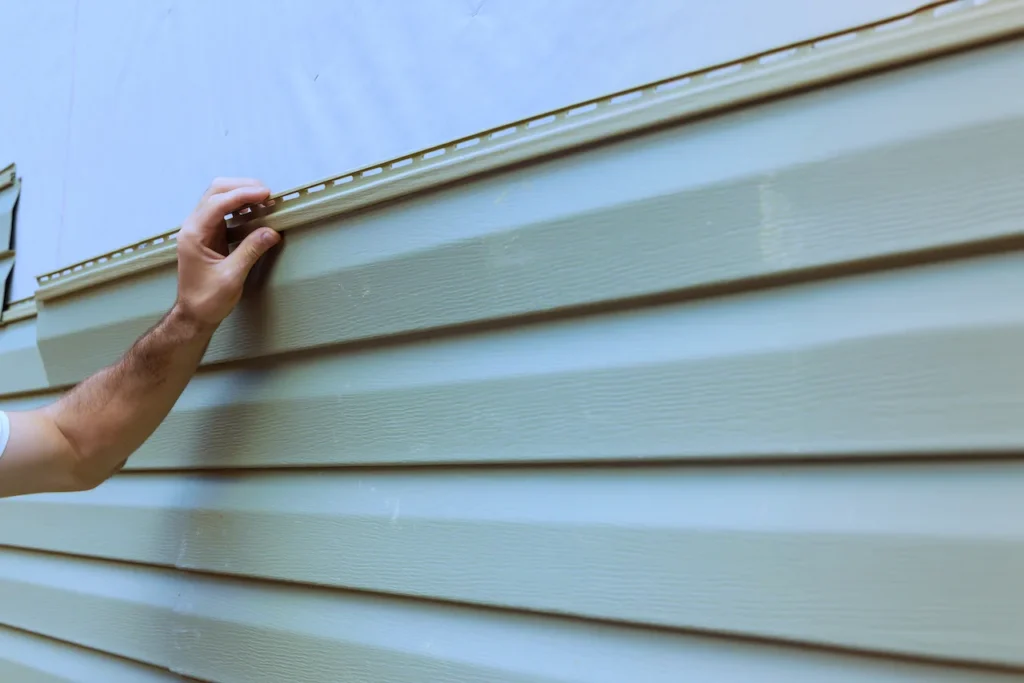
Can You Fix Warped Vinyl Siding?
Sometimes, yes. The right repair depends on the cause and on how long the panel has been distorted. Here is the order we recommend.
Step One: Remove the Cause
Replacing a panel without solving the underlying problem just sets up a repeat. Move grills and fire pits well away from the house. If reflected light is the issue, block the sunlight before it reaches the glass or the siding. If moisture is involved, repair the leak and the drainage before touching the siding.
One vendor, EZ-Snap, adds practical advice for reflection cases: do not replace damaged siding until the source is fixed, and keep other objects out of the beam’s path, since they can be damaged too. The company sells shade screens, so weigh its product claims accordingly, but the sequencing advice holds up for any fix.
Freeing Pinched Panels
If tight fasteners are the problem and the vinyl has not been permanently stretched, a careful installer can loosen the nails and let the panel settle back into place. This works best on ground-level panels with minor ripples and on installations where the cause is clearly fastener pressure.
Our guide on how to repair vinyl siding explains what is realistic for a DIY job and when the work is better left to a pro.
When Panels Have to Be Replaced
Panels that have melted, stretched, or buckled for a long time usually cannot be reshaped. O’Donnell Brothers states that once buckling occurs the affected panels need replacing, since the problem cannot be undone in place.
Replacement involves unlocking the damaged panel from the ones above and below it. The ASTM installation standard describes a special hand tool, called a zip tool, used to separate interlocked siding panels. A new panel is then fastened with the same loose, centered nailing described earlier, so it will not repeat the problem.
The Color Matching Problem
Matching an older, weathered wall can be tricky. Siding fades over the years, and the exact color or profile may no longer be made. O’Donnell Brothers also flags this as a real challenge when replacing older siding.
Start by identifying exactly what you have. Our post on what type of siding you have is a good starting point. If a good match is not available, a pro may suggest replacing a full wall or elevation so the finished result looks consistent.
Repair or Replace: How to Decide
Use these guidelines to decide whether a patch repair is enough:
- Repair when only a few panels are affected, the cause is clearly fixed, and the panels are not melted or stretched.
- Replace panels when distortion is permanent but limited to one area and a color match is available.
- Replace a whole wall when matching is difficult or when several panels on one elevation are affected.
- Consider a full siding replacement when warping is widespread, the original installation was faulty throughout, or hidden damage is found behind the siding.
Warranty Questions About Warped Siding
Many homeowners hope a warranty will cover the repair. Whether it does depends on why the siding warped.
Installation Errors vs Product Defects
Warping caused by tight nailing or poor trim work is an installation problem, not a product defect. O’Donnell Brothers notes that manufacturer warranties typically do not cover defects that come from installation. In that case, the installer’s own workmanship warranty is the place to start. Ask your contractor what it covers and for how long.
Heat Distortion Exclusions
Some manufacturers limit or exclude coverage for distortion caused by outside heat. The Fine Homebuilding report on reflected heat, for example, cites a CertainTeed warranty that carves out vinyl siding distorted by certain heat sources. Read your own warranty carefully, because the exact wording varies from brand to brand.
What to Gather Before You Call
Having your information ready speeds everything up:
- The siding brand, product line, and color, if you know them
- Your installation date and the installer’s name
- Photos of the damage taken at different times of day
- Notes on any recent changes, such as painting, new windows, or a moved grill
- Your warranty paperwork
How to Prevent Vinyl Siding Warping
Prevention is mostly about installation quality and about managing what happens around the house.
Choose Installers Who Follow the Standard
The best protection is a job done to the manufacturer’s instructions and the industry standard. When you interview contractors, ask:
- Do you follow the manufacturer’s installation instructions and ASTM D4756 on every job?
- How do you set nail depth so panels can move?
- How do you leave room at corners, trim, and window openings?
- Who installs your siding, and are they your own employees?
- What workmanship warranty do you offer, and what does it cover?
Industry sources note that installation errors continue to be a challenge for siding contractors, so these questions matter.
Manage Heat Around the House
Keep grills, fire pits, patio heaters, and similar equipment well clear of exterior walls. Check where dryer vents and other exhausts point. If you cook outside often, a freestanding grill pad away from the house is a small change that protects your siding.
Protect Siding From Window Reflections
If reflected light is a risk, block the sunlight before it reaches the glass. Options include an exterior shade screen, an awning, or planting shade trees or tall shrubs in the right spot. Each has trade-offs in cost, upkeep, and light, so choose what fits your home. Replacing the windows is usually not required.
If you are planning new windows, our guide to energy-efficient windows explains the choices, and you can ask us about how glass coatings and nearby siding interact.
Paint Smart
Stay with light colors, or use a paint line made for vinyl. If you want a darker look, ask a pro about vinyl safe colors rather than guessing. Follow the paint manufacturer’s surface preparation instructions and avoid oil-based coatings on vinyl.
Keep Water Under Control
Clean gutters, direct downspouts away from the foundation, and aim sprinklers away from the walls. Fix leaks around windows, doors, and flashing promptly. Water management protects the structure behind the siding as well as the siding itself.
Inspect Twice a Year
Walk the property each spring and fall, and after major storms. Look for new ripples, loose panels, melted spots, and stains. Catching a small problem early is far cheaper than waiting until it spreads to neighboring panels.
Is Another Siding Material a Better Fit?
If reflected heat or nearby heat sources keep damaging your home, it may be worth comparing materials. James Hardie fiber cement siding does not melt the way vinyl can, which makes it a popular choice where heat exposure is a concern. It has different maintenance needs, including paint, so it is worth reading our post on painting James Hardie before deciding.
If you would rather stay with vinyl, our Mastic vinyl siding options offer a range of colors, textures, and profiles, and correct installation does most of the work in preventing warping. A consultation can help you compare the options side by side for your specific home.
Common Myths About Warped Vinyl Siding
A lot of advice online mixes up causes and fixes. These are the myths we hear most often from homeowners.
Myth: Cheap Siding Is the Problem
Product quality matters, but warping is more often an installation or surroundings issue. Even premium panels buckle when nails are overdriven or a grill sits against the wall. That is why the installer you choose is just as important as the product.
Myth: Warping Always Means the Siding Is Defective
Because the cause is so often installation or heat, defects are the less likely explanation. A proper diagnosis comes before any warranty claim, and the pattern of damage usually tells the story.
Myth: Replacing Panels Solves It for Good
New panels will warp again if the cause is still there. Whether the source is tight fasteners, a reflected beam, or moisture, it has to be corrected first.
Myth: Only Old Siding Warps
New siding can warp too, and sometimes quickly. A fresh installation with overdriven nails can show ripples the first hot week, which is why a post-installation walk-through is worth doing.
Why Fixing Warped Siding Early Matters
It is tempting to ignore a few ripples. Here is why we recommend acting sooner.
- Curb appeal. Feldco notes that warped siding can make an entire house look neglected, which affects how buyers and neighbors see it.
- Moisture risk. Gaps and distortion can let water in, leading to mold, odors, and interior damage.
- Spreading damage. A restricted panel strains its neighbors, so a small repair can become a large one.
- Simpler repairs. Early on, the fix may be as simple as loosening fasteners or moving a heat source.
When to Call a Pro About Vinyl Siding Warping in Charlotte
Some situations are not worth guessing about. Call a professional if:
- Several panels are affected, or the problem keeps coming back
- The wall feels soft, looks stained, or smells musty
- You cannot tell what is causing the damage
- The siding is on a second story or another hard-to-reach area
- You want help understanding what your warranty covers
- You are thinking about replacing siding and want options
Vinyl siding warping is rarely random, and the sooner you find the cause, the less it tends to cost to fix. Southern Home Services has served the Charlotte area since 2001, and our team can inspect your siding, pinpoint what went wrong, and recommend the right repair or replacement. Check that we serve your neighborhood on our service areas page, read what neighbors say on our customer reviews page, then contact us today or call 704-531-2122 to schedule your consultation.
Vinyl Siding Warping FAQs
Why is my vinyl siding warping in the sun?
Direct sun alone rarely warps properly installed siding. The more likely causes are panels nailed too tightly, a darker paint color, or sunlight reflected from a window onto one spot. Heat is the trigger, but the underlying problem is usually that the vinyl cannot move freely.
Can a neighbor’s windows melt my vinyl siding?
Yes. Reflected sunlight from low-E windows has been documented damaging siding on neighboring homes, sometimes across a driveway. Shading the siding or the glass can stop it, and it is worth talking with the neighbor early.
Is warped vinyl siding covered by warranty?
It depends on the cause and the manufacturer. Some warranties exclude heat distortion from reflected light, and installation mistakes usually fall to the installer. Review your warranty and your installer’s paperwork, and call us if you need help interpreting them.
Will warped vinyl siding go back to normal?
Minor ripples from tight fasteners may relax once the panel is freed. Melted or long-stretched panels typically need to be replaced.
Can I repair warped siding myself?
Small, ground-level fixes may be manageable. Multiple panels, high walls, or any sign of moisture behind the siding are better left to a professional.
What temperature makes vinyl siding warp?
The Vinyl Siding Institute says temperatures of 160 to 165 degrees Fahrenheit can begin to soften standard vinyl siding. Reflected heat from some windows has been measured well above that.
How do I know if moisture is behind my warped siding?
Look for stains, a musty smell, soft spots, or bulges that appear after rain. A professional can inspect behind the panels to confirm.
Does painting vinyl siding make it warp?
It can if the new color is darker than the original, since darker colors absorb more heat. Choosing a light color or a paint made for vinyl lowers the risk.
Related Topics
